AI Art


AI Boyfriend
AI Companion
AI Futa
AI Girlfriend
AI Hentai
AI Porn
Anime AI
How Does an AI Hentai Maker Work? A Beginner-Friendly Guide
Learn how an AI hentai maker works, how to write image descriptions, customize characters, choose styles, and connect images with AI chat.


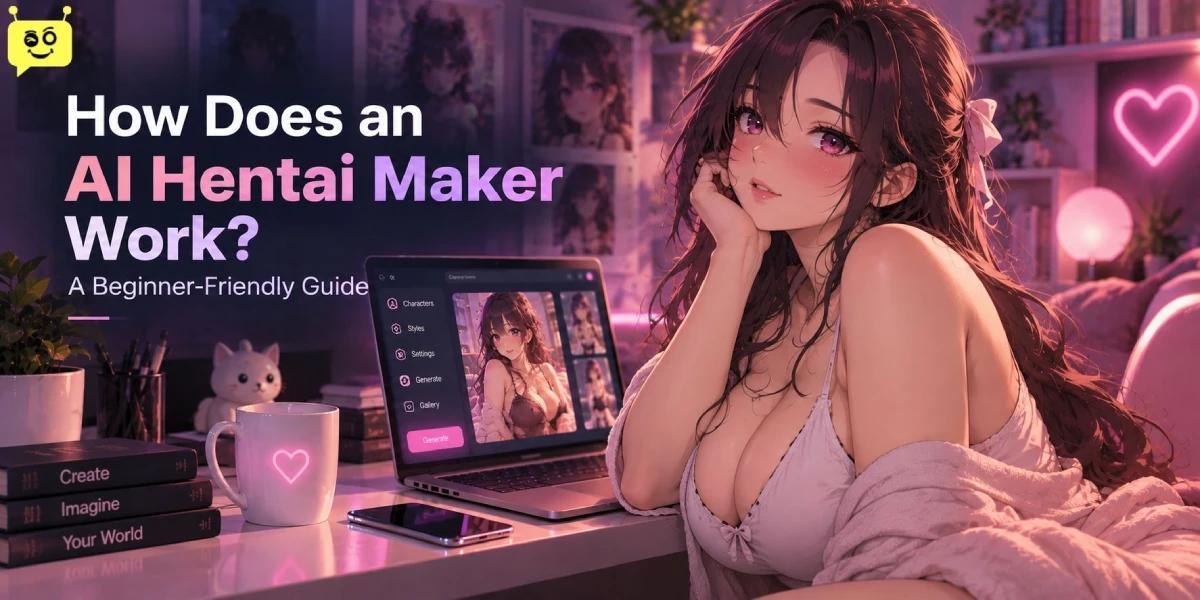
AI-created anime characters and digital artwork have become popular because people can turn a written idea into a picture without drawing skills. You simply describe what you want and the tool creates a digital image.
An AI hentai maker is a tool that can turn a written description into an anime-style digital image, where allowed by the platform. AI hentai refers to AI-created or AI-assisted adult-oriented anime-style digital content. Adult-oriented AI content is intended for adults and should follow the platform’s rules.
This guide explains the topic in plain English for complete beginners.
What Is AI Hentai?
AI hentai is AI-created or AI-assisted adult-oriented anime-style digital content.
The broader idea combines anime-inspired artwork with AI image creation. Users focus on anime characters, digital artwork, character appearance, styles, and creative customization. Adult-oriented content is framed as 18+.
What Is an AI Hentai Maker?
An AI hentai maker is an AI image creation tool designed to create adult-oriented anime-style images from written descriptions, where permitted.
The basic idea is simple:
Describe → Choose a style → Generate → Review → Adjust
You write what you want, pick a look if available, create the image, check the result, and change the description if needed.
How Does an AI Hentai Maker Work?
Short answer: You describe the image you want in words, choose a style if available, generate the image, review the result, and adjust the description until it matches your idea more closely.
Here is the full process in simple steps.
 Step 1: Describe What You Want
Users start by writing a description. They can mention the character, hair, eyes, outfit, background, lighting, art style, mood, and pose. Examples stay non-graphic.
- Step 2: Choose the Look
Some platforms offer different styles such as anime, realistic, illustration, or fantasy. Available options depend on the platform.
- Step 3: Generate the Image
The platform creates an image based on the user’s description.
- Step 4: Review the Result
The first result may not always match the exact idea.
- Step 5: Adjust the Description
Users can change certain details and try again. Most people need a few attempts to get closer to what they imagined.
What Is an AI Image Prompt?
A prompt is simply a written description of the image you want.
Example:
“An adult anime woman with long silver hair and blue eyes, wearing an elegant black outfit, standing in a modern room with soft lighting, detailed anime artwork.”
Each part gives the image maker useful information about the character, appearance, clothing, setting, lighting, and style.
What Should You Include in an AI Image Prompt?
A strong AI image prompt gives the generator enough visual information to understand what you want without making the description unnecessarily complicated. Instead of relying on a few broad words, describe the most important elements of the image clearly.
| Prompt Element | What to Specify |
|---|---|
| Character | The person, character, or subject you want to create |
| Appearance | Hair, eye color, facial features, body type, and overall look |
| Clothing | Outfit, colors, materials, and fashion style |
| Environment | Bedroom, beach, studio, city, fantasy world, or another setting |
| Lighting | Natural daylight, golden hour, soft studio light, neon, or cinematic lighting |
| Visual Style | Photorealistic, anime, digital art, illustration, or another aesthetic |
| Pose & Framing | Standing, sitting, close-up, full-body, portrait, or another composition |
| Expression & Mood | Confident, relaxed, playful, mysterious, romantic, or another atmosphere |
A useful approach is to start with the subject and build the scene around it. Define the character first, then describe their appearance and clothing before adding the environment, lighting, composition, and overall mood. This gives the AI a clearer structure to follow while still leaving room for creative interpretation.
Why Does the Prompt Matter?
A clearer description helps communicate the idea more effectively.
Short description: “Anime woman.”
Detailed description: “An adult anime woman with long black hair and blue eyes, wearing a stylish red dress, standing in a modern apartment, soft evening lighting, detailed anime artwork.”
The second description gives more information about the desired image. Detailed prompts do not guarantee perfect results, but they usually produce closer matches.
AI Hentai Maker and Character Customization
Users may be able to customize hair color, hairstyle, eye color, facial appearance, clothing, accessories, background, lighting, art style, mood, and pose.
Available customization varies from one platform to another. Clear descriptions give more control over the final look.
Realistic vs Anime Styles
The visual style you choose can significantly change how an AI-generated character looks and feels. Some users prefer a lifelike, photographic result, while others may want the expressive appearance of anime or a more imaginative artistic direction.
| Style | What You Can Expect |
|---|---|
| Realistic | Lifelike characters with natural-looking skin, lighting, facial details, and photography-inspired visuals |
| Anime | Illustrated characters with stylized facial features, expressive eyes, and animation-inspired aesthetics |
| Fantasy | Imaginative characters, environments, clothing, and visual elements that may not exist in the real world |
| Artistic | Creative interpretations using distinctive colors, textures, lighting, or illustration techniques |
The right choice depends on the result you want to create. Realistic styles work well for photography-inspired characters, while anime, fantasy, and artistic styles provide more freedom for stylized or imaginative visuals.
AI Hentai Maker vs Traditional Anime Art
AI-assisted image tools and traditional anime illustration can both be used to create stylized character artwork, but the creative process behind them is quite different. AI tools generally begin with written instructions and generate variations automatically, while traditional artwork is created directly through an artist’s drawing and design skills.
| Feature | AI Hentai Maker | Traditional Anime Art |
|---|---|---|
| Creation Process | Generated or assisted by AI models | Drawn and developed by an artist |
| Starting Point | Usually a text prompt or reference | Sketch, concept, or original drawing |
| Creation Time | Variations can be produced quickly | Often requires more hands-on time |
| Customization | Prompts and settings can be adjusted | Details are manually changed by the artist |
| Experimentation | Makes it easy to test multiple concepts | New variations generally require additional drawing |
| Creative Control | Influenced by prompts and model capabilities | Artist has direct control over individual details |
The biggest distinction is how creative decisions are translated into the final image. AI-assisted tools make it easier to explore different concepts and variations through prompts, while traditional anime art provides the artist with direct, hands-on control over composition, character details, and the overall visual style.
AI Hentai Images vs AI Character Chat
AI-generated images and AI character chat offer two distinct ways to interact with fictional characters. One is primarily a visual experience focused on how a character looks, while the other emphasizes personality, dialogue, and ongoing interaction.
| Feature | AI Hentai Images | AI Character Chat |
|---|---|---|
| Primary Experience | Visual character content | Interactive conversations |
| User Interaction | Mainly viewing and generating images | Continuous text or voice interaction |
| Character Personality | Expressed mostly through visual design | Influences dialogue and responses |
| Storytelling | Communicated through scenes and imagery | Develops through conversations and roleplay |
| Personalization | Appearance, style, setting, and other visual details | Personality, preferences, conversation style, and scenarios |
| Continuity | Individual images may stand alone | Conversations can develop across multiple messages |
The key difference is visual creation versus interaction. AI-generated images emphasize a character’s appearance and setting, while AI character chat makes the character more conversational and personality-driven. Platforms that support both can connect these experiences, allowing users to visualize a character and then interact with that character through AI-powered conversations.
How AI Characters Make Digital Experiences More Interactive
A character can be more than a picture when users can also interact with it through conversation.
Character personalities, conversations, different character types, personalized interactions, roleplay, and visual character experiences all add depth. The combination of image and chat turns a static picture into an ongoing experience.
How ChatReal Fits Into AI Character Experiences
ChatReal focuses on AI companion and character-based experiences.
Users can explore AI characters, personalized conversations, character interaction, AI-generated images where available, roleplay, and other interactive features. The platform sits within the wider world of AI character experiences that combine conversation and visuals. This section stays informative rather than promotional.
Why Do People Use AI Hentai Makers?
People explore AI image creation for practical reasons.
- Creativity – Users can turn ideas into digital artwork.
- Character Creation – People can experiment with different fictional characters.
- Personalization – Users can change visual details.
- Style Experimentation – Different styles produce different looks.
- Storytelling – Characters can be used as part of fictional stories or imagined worlds.
- Interactive Experiences – When image creation is combined with AI character chat, the experience becomes more interactive.
These reasons stay general and non-graphic.
How to Create Better AI Character Images
- Be Clear – Describe the main character first.
- Add Useful Details – Mention appearance, setting, lighting, and style.
- Choose One Main Style – Avoid mixing too many unrelated styles.
- Keep the Description Organized – Move from the main character to smaller details.
- Make Small Changes – If the first image is not right, change one or two details.
- Experiment – Try different descriptions and styles.
AI image creation often involves experimentation.
Common Mistakes Beginners Make
- Using very short prompts → “Anime character” gives limited information.
- Adding too many details → A confusing description may not produce the desired result.
- Changing everything at once → Changing one detail at a time makes experimentation easier.
- Expecting a perfect result every time → Results can vary.
- Ignoring platform rules → Follow the platform’s content and age requirements.
Simple adjustments solve most of these problems.
AI Hentai Free: What Should You Know?
“Free” can mean different things on different platforms. It may refer to limited free generations, free trials, certain features being free, usage limits, or paid options for additional features.
Always check the current pricing and usage rules of the platform you choose. Do not assume unlimited free access.
Privacy and Responsible AI Image Creation
- Be careful when uploading personal photos.
- Read the platform’s privacy policy.
- Understand how uploaded content may be handled.
- Do not create intimate or misleading images of real people without permission.
- Use fictional adult characters for adult-oriented content.
- Never involve minors in adult content.
- Follow the platform’s rules.
- Respect other people’s privacy and identity.
These points are practical and important.
Are AI Hentai Images Real?
No. AI-created images are digital creations. Some may look realistic, but that does not mean they are photographs of a real event or real person.
Users should not automatically treat realistic-looking AI images as real-world evidence.
What Are the Limitations of AI Hentai Makers?
Results may vary. Characters may not always look exactly as described. Some details may be inconsistent. Different platforms have different content rules. Some features may have usage limits. Image quality can vary. Privacy practices differ between services. Users may need to make several attempts.
These limitations keep expectations realistic.
What Should You Look for in an AI Hentai Maker?
- Easy interface
- Image styles
- Character customization
- Prompt flexibility
- Image quality
- Privacy practices
- Content rules
- Adult age requirements
- Free vs paid options
- Additional AI character features
Choose based on the features you actually want.
The Future of AI Anime and Character Creation
AI could bring more character customization, more visual styles, better consistency between images, easier image creation, more personalized characters, stronger connection between images and AI chat, more interactive storytelling, and AI companions becoming more visual and personalized.
Future platforms may develop in these directions. Progress is not guaranteed.
Key Things to Remember
- An AI hentai maker creates adult-oriented anime-style images where allowed.
- Users describe what they want using written prompts.
- Clear descriptions can make it easier to communicate an idea.
- Characters can often be customized in different ways.
- Image creation and AI character chat offer different experiences.
- ChatReal connects with the broader idea of interactive AI characters and personalized experiences.
- Privacy, consent, age requirements, and platform rules are important.
Frequently Asked Questions
What is an AI hentai maker?
It is an AI image creation tool that turns written descriptions into adult-oriented anime-style digital images, where the platform allows it. You describe the character and scene, then generate the picture.
How does an AI hentai maker create images?
You write a description of the character, appearance, outfit, setting, lighting, style, and mood. The tool uses that description to create an image. You review the result and adjust the description if needed.
Can I customize an AI-generated anime character?
Yes. Most tools let you change hair, eyes, clothing, background, lighting, style, mood, and pose through the written description. Available options depend on the platform.
Is an AI hentai maker free to use?
Free access and limits vary between platforms. Some offer limited free generations, free trials, or basic features without payment. Always check the current rules of the service you choose.
Are AI hentai images real?
No. They are digitally created images. Even when they look realistic, they are not photographs of real events or real people.
Conclusion
An AI hentai maker is essentially an AI image creation tool that allows users to describe an idea and turn it into anime-style digital artwork where permitted. Prompts, character customization, different styles, AI image creation, AI character chat, personalization, and interactive experiences all play a role.
ChatReal is one example of an AI platform focused on character-based and personalized digital experiences. Understanding how descriptions work, what styles are available, and why privacy and responsible use matter helps beginners get better results and use these tools with clear expectations.