AI Art


AI Boyfriend
AI Companion
AI Futa
AI Girlfriend
AI Hentai
AI Porn
Anime AI
Beyond a Free AI Nudes Generator: What If the Character Could Talk Back?
A free AI nudes generator creates how a character looks. Discover what changes when that same AI character can talk, have personality, and become a companion.


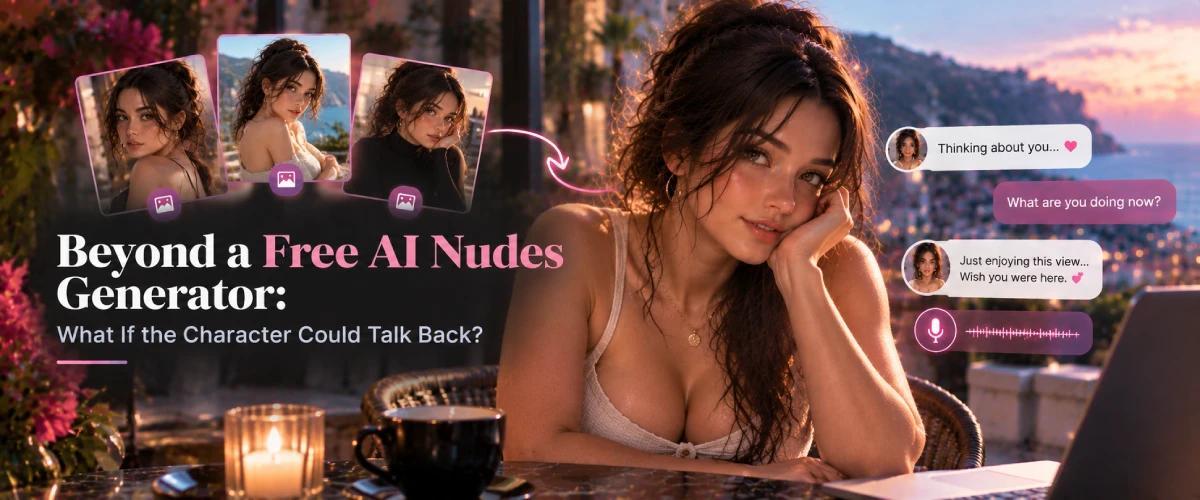
You may search for a free AI nudes generator because you want to create a fictional adult character that matches an idea in your head. Maybe you care about appearance, body type, hair, face, clothing, style, and overall vibe.
Once you have created a character you like, what happens next? What if that character could have a personality, talk to you, remember parts of your interactions, appear in different scenes, and become an ongoing virtual companion? That is the bigger question this guide explores.
What Does a Free AI Nudes Generator Actually Give You?
These tools generally focus on visual creation. The user describes or selects what they want and receives an AI-generated adult fictional image.
The appeal is real: creative control, different appearances, character experimentation, visual fantasy, trying different styles, and quick results. This article does not provide instructions for generating explicit sexual imagery.
The image can show what a character looks like, but appearance alone does not tell you who that character is.
You Created the Character. Now What?
Imagine you have created an adult fictional character called Alex. You have decided hair, face, body type, style, and overall appearance. The image looks exactly how you wanted.
How does Alex speak? Is Alex funny or serious? Confident or shy? Affectionate or sarcastic? What does Alex remember about previous conversations? What kind of relationship does the character have with you?
These questions move the experience from image creation toward character creation.
An Image Shows Appearance. A Character Needs Identity.
A generated image can tell you a lot about how a character looks, but much less about who that character is. You might see their face, hairstyle, body type, clothing, and overall style, but those visual details are only the starting point.
Character identity goes further. It can include a name, personality, interests, way of speaking, background, relationship role, preferences, and details carried forward from earlier conversations. These elements can turn a character from something you simply look at into someone you can continue interacting with.
| Character Element | Image-Based Experience | Interactive Character Experience |
|---|---|---|
| Appearance | Usually the main focus | Part of a wider character identity |
| Personality | Mostly suggested through appearance | Expressed through conversation and behavior |
| Conversation | Usually not the main experience | Central to the experience |
| Relationship | Usually left to the viewer's imagination | Can have a defined fictional role |
| Memory & context | Usually not part of a standalone image | Previous details may carry forward where supported |
| Roleplay | A scene can be shown visually | Scenarios can continue through conversation |
| Environment | Usually captured in one visual scene | Character may appear across different scenes |
| Voice | Not part of a standalone image | May add another way to interact |
| Ongoing interaction | Usually centered on individual creations | Can continue with the same character over time |
Think about creating an adult fictional character called Alex. An image can show Alex's face, hairstyle, clothing, and surroundings. But it cannot tell you much about whether Alex is funny, confident, caring, sarcastic, adventurous, or quiet.
Once personality and conversation are added, Alex can begin to have a more recognizable fictional identity. Add a relationship role, previous conversation context, different scenes, and voice interaction, and the experience moves further away from simply generating a character image toward spending time with an interactive AI character.
That is the important difference: appearance introduces the character; identity gives you more reasons to keep interacting with them.
What If Your AI Character Could Talk Back?
AI character chat means you do not simply look at a character. You can talk to it. The character can respond according to its fictional personality.
A confident character may respond differently from a shy character. A humorous companion may joke more. A mentor character may speak differently from a romantic companion. A friend may interact differently from a boyfriend or girlfriend character.
Conversation adds another layer to character identity that a single image cannot provide.
Personality Changes Everything
The same visual character can become completely different experiences depending on personality.
 Version A — Warm, affectionate, relaxed
“What should we do tonight?” → “Something quiet. Let’s stay in and talk.”
- Version B — Confident, playful, energetic
“What should we do tonight?” → “Anything fun. Surprise me.”
- Version C — Quiet, thoughtful, mysterious
“What should we do tonight?” → “Depends. What kind of night do you want?”
Appearance may attract attention first, but personality often determines how the ongoing interaction feels.
The Same Character Can Have Different Relationships
Relationship roles change conversation.
Examples include girlfriend, boyfriend, friend, partner, mentor, colleague, and neighbor. A mentor should not communicate exactly like a romantic partner. A friend should not necessarily behave like a colleague.
This makes the experience about more than appearance. Relationship context shapes tone, topics, and expectations.
From One Image to an Ongoing AI Companion
Creating an image and interacting with an AI companion can start from the same idea: “I want to create a character I like.” The difference is what happens after that character appears.
With an image generator, the journey often looks like:
Create → View → Adjust → Generate Again
With an interactive character, it can continue:
Create → Personalize → Talk → Interact → Build Context → Continue
| Experience | Image Generator | AI Companion |
|---|---|---|
| Main goal | Create a visuual | Interact with an ongoing character |
| Appearance | Usually the main focus | One part of the character's identity |
| Conversation | Usually separate or unavailable | A central part of the experience |
| Personality | Mostly communicated visually | Expressed through replies and behavior |
| Relationship | Usually left to the user's imagination | Can have a chosen fictional relationship role |
| Scenes | Created as visual settings | Can become places for character interactions |
| Activities | Usually represented in an image | Character may perform different activities |
| Voice | Usually outside the image itself | May provide another way to communicate |
| Continuity | Often focused on individual creations | Can continue with the same companion |
| Personalization | Mainly visual choices | Can extend to personality, persona, relationship, and interaction |
Imagine you create an adult fictional character you really like. With an image generator, you might create another picture of that character in a different outfit or setting. That can be exactly what you want if your main goal is visual creation.
An AI companion takes the idea in another direction. Instead of asking only “What should this character look like?”, you can start asking “What are they like to talk to?” Their personality, conversation style, relationship role, and previous interactions can become part of the experience.
That is the real shift from one image to an ongoing character. One experience focuses primarily on creating something to see; the other gives you a fictional character you can return to and continue interacting with. Neither is automatically better—the right experience depends on what you actually want from the character.
Why Character Continuity Matters
Users may become attached to a particular fictional character design. They may not want a completely different character every time.
They may want the same name, same general appearance, same personality, same relationship, and same shared context while exploring different conversations or situations. Continuity can make an AI character feel more like one ongoing fictional companion instead of a collection of unrelated outputs.
What Does Memory Add to an AI Character?
From the user’s perspective, memory means the character can keep track of parts of your conversation.
If you tell a companion “I love hiking,” it may be useful if that information remains part of the ongoing interaction. The same applies to favorite movies, music, travel, shared fictional stories, and relationship context. Remembering relevant details can make future conversations feel more connected.
Memory capabilities vary between platforms and settings. Perfect memory should not be assumed.
From Static Backgrounds to Scenes
A background in an image is something you view. An interactive scene can become part of what you do with the companion.
Environments such as home, beach, mountains, office, gym, nighttime settings, and outdoor locations change the feel of the interaction. The same character in a quiet room and the same character in an outdoor setting can create different moods and conversation directions.
What If the Character Could Do Things Too?
Visible actions make the character feel less static.
Examples include sitting together, dancing, laughing, working out, swimming, relaxing, exploring a setting, playing with a pet, camping, or looking through a telescope. These activities stay non-explicit. They turn the character from a still image into someone who appears to participate in the moment.
Text Is Not the Only Way to Interact
Companion experiences can extend beyond text.
- Text — You read the character’s reply.
- Voice — You hear the interaction.
- Visual — You see the character.
- 3D / video interaction — The character becomes part of a more immersive experience.
This progression does not require exaggerated claims about realism. It simply describes different ways the same fictional character can be experienced.
Free AI Nudes Generator vs Interactive AI Character
A free AI nudes generator and an interactive AI character can both begin with the same interest: creating a fictional adult character. But they usually take that character in different directions. One is mainly about creating the visual you want, while the other focuses on what happens when you continue interacting with that character.
| Feature | Free AI Nudes Generator | Interactive AI Character |
|---|---|---|
| Primary goal | Generate character visuals | Build an ongoing character experience |
| Character appearance | Usually the main focus | Part of a broader character identity |
| Personality | Mostly suggested through the visual | Can shape conversation and behavior |
| Conversation | Usually not the main experience | Often central to the experience |
| Relationship roles | Usually outside visual generation | Can help define how the character interacts |
| Character continuity | May vary between generated images | Can focus on returning to the same character |
| Scenes | Used as visual backgrounds and settings | Can become part of character interactions |
| Activities | Usually shown within generated visuals | May be experienced through character actions |
| Voice | Separate from the generated image | May provide another way to interact |
| Ongoing experience | Often centered on creating new visuals | Designed around continued interaction |
| User participation | Describe, create, adjust, and view | Talk, personalize, interact, and continue |
The biggest difference is what you want after the character has been created. If your goal is simply to explore different fictional adult character visuals, an image generator may already provide the experience you are looking for.
But if you find yourself wondering what that character would say, what their personality would be like, or how your interactions could continue over time, you are moving into interactive AI character territory.
That is where an AI companion experience becomes different. The character is no longer defined only by appearance. Personality, conversation, relationship context, scenes, activities, and other forms of interaction can become part of the same fictional identity. Neither approach is universally better—they simply answer different versions of the question: Do you want to create a character to see, or a character you can keep interacting with?
When Does an AI Character Start Feeling Personal?
Personalization comes from several elements working together: appearance, personality, name, relationship, conversation history, preferences, voice, and shared fictional experiences.
No single feature creates personalization on its own. It emerges when the character feels consistent, recognizable, and responsive over time.
From “Create Someone” to “Spend Time With Someone”
Image generation asks: “What should my character look like?”
Companion experiences add questions such as: “Who is this character?” “How do they speak?” “What is our relationship?” “What do we do together?” “What have we talked about before?”
That shift represents a fundamentally different type of character experience — from producing a result to continuing an interaction.
Where ChatReal Fits In
ChatReal approaches AI characters as companions rather than only individual generated images.
A user can begin with how their companion looks, then define personality and persona, then choose the type of relationship. Conversation becomes the center of the experience. Visual scenes and activities can make interactions more expressive. Voice and video-style interactions can add another level beyond text. Memory and context features can help parts of the relationship carry forward.
ChatReal supports customizable male and female companions, personality customization, different relationship roles, AI chat, character images, different scenes, activities, voice interaction, video calls, and 3D companion experiences. The character remains an AI-created fictional character, not a conscious being.
An AI Companion Is Still an AI Character
Even when a companion has a face, voice, personality, memory, and relationship role, it remains an AI-created fictional character.
It does not have human consciousness, real emotions, or a real-world relationship with the user. This boundary does not remove the entertainment value. It keeps expectations clear.
Choosing the Experience You Actually Want
If you mainly want a visual character → image generation may fit the goal.
If you want conversation and personality → character chat may fit better.
If you want an ongoing character with appearance, personality, relationship context, scenes, and interaction → an AI companion experience may be closer to what you are looking for.
The right choice depends on what you want to do with the character afterward.
Frequently Asked Questions
What is a free AI nudes generator?
It is a tool that creates adult-oriented AI-generated images of fictional characters from written descriptions or selections, where the platform allows it. The focus is visual creation rather than ongoing interaction.
What is the difference between an AI image generator and an AI companion?
An image generator focuses on creating a visual. An AI companion focuses on ongoing interaction through conversation, personality, relationship roles, and, on some platforms, scenes, voice, and continuity.
Can an AI-generated character have a personality?
Yes. You can design and express personality through conversation style, tone, and responses. This is simulated behavior, not consciousness or real emotion.
Can I talk to an AI character I create?
Character-focused platforms can combine character customization with chat, depending on the service. ChatReal is one example of a platform built around interactive AI companions rather than only static images.
What makes an AI companion different from a chatbot?
A companion experience may combine conversation with character identity, appearance, relationship roles, visual environments, voice, and ongoing personalization. A basic chatbot may focus mainly on replies without a defined character identity.
Final Thoughts
You created a character you like. The interesting question is what happens after the image exists.
A free AI nudes generator can focus on creating how a fictional adult character looks. An AI companion explores another question: who is that character when you start interacting with them?
Appearance leads to personality. Personality leads to conversation. Conversation leads to relationships. Relationship leads to an ongoing companion experience. ChatReal.ai is built around that fuller journey — from how a character looks to how it feels to keep interacting with them.
If you came looking for a way to create an adult AI character, the next step is understanding the difference between generating an image and building a character you can continue talking to.