Can Companion AI Make Your Relationship Stronger?

The relationships we have with other people today are far away from what they used to be even five years ago, particularly because of how heavily influenced they are by advances in technology. One of the new technologies being developed within this field is Companion AI—we have created this type of technology so it can engage in a meaningful, emotionally intelligent manner with the user.
Many people believe that the purpose or intent behind Companion AI is to replace relationships between two human beings; however, most of the time, the two purposes are opposite. The right Companion AI can actually help individuals communicate with one another better, provide them with a way to self-reflect, and give them an easier way to build connections with their partners. Rather than serve as a replacement relationship, Companion AI can be used as an electronic tool that provides an individual with encouragement to have better conversations, and develop their emotional intelligence.
Do you wish you could speak freely with someone about your feelings, practice hard conversations, or ask for advice regarding your relationship? Companion AI ,can provide that much needed space to have this kind of dialogue. That being said, whether people are single or now entering into a committed partnership, these tools can provide insight and self-awareness for people who seek personal or relationship growth.
But the question remains, can Companion AI Improve Relationship Strength? In this article, we will be discussing Companion AI's intended purpose as well as the reasons why more and more individuals are seeking out an emotional support or a Companion AI for personal and relationship growth.
What Is Companion AI?
An artificial intelligence program specifically created to interact (or have a conversation) with users, usually in an emotionally interactive manner. The companion AI is designed to have simulated conversations with you through natural language processing techniques and to use ML algorithms for natural conversations.
The Companion AI will typically have the ability to keep track of user preferences, to know the emotional context of their respective users, and to develop and/or provide personalized responses to their users over a longer period of time as they interact with the program.
Common features of a Companion AI include:
- Natural conversations that feel human-like
- Emotional awareness and supportive responses
- Memory of past interactions
- Personalized communication style
- Availability anytime for discussion or reflection
For many people, using an AI or virtual assistant has provided them with a safe space in which to share their perspectives, both positive and negative. The availability of a conversational medium through which individuals can communicate openly has allowed many people to develop increased self-awareness, both emotionally and in terms of communication skills, when interacting with an AI. This increase in self-awareness can contribute to the establishment of stronger relationships and greater levels of connection with others in the physical world.
How Companion AI Supports Better Communication
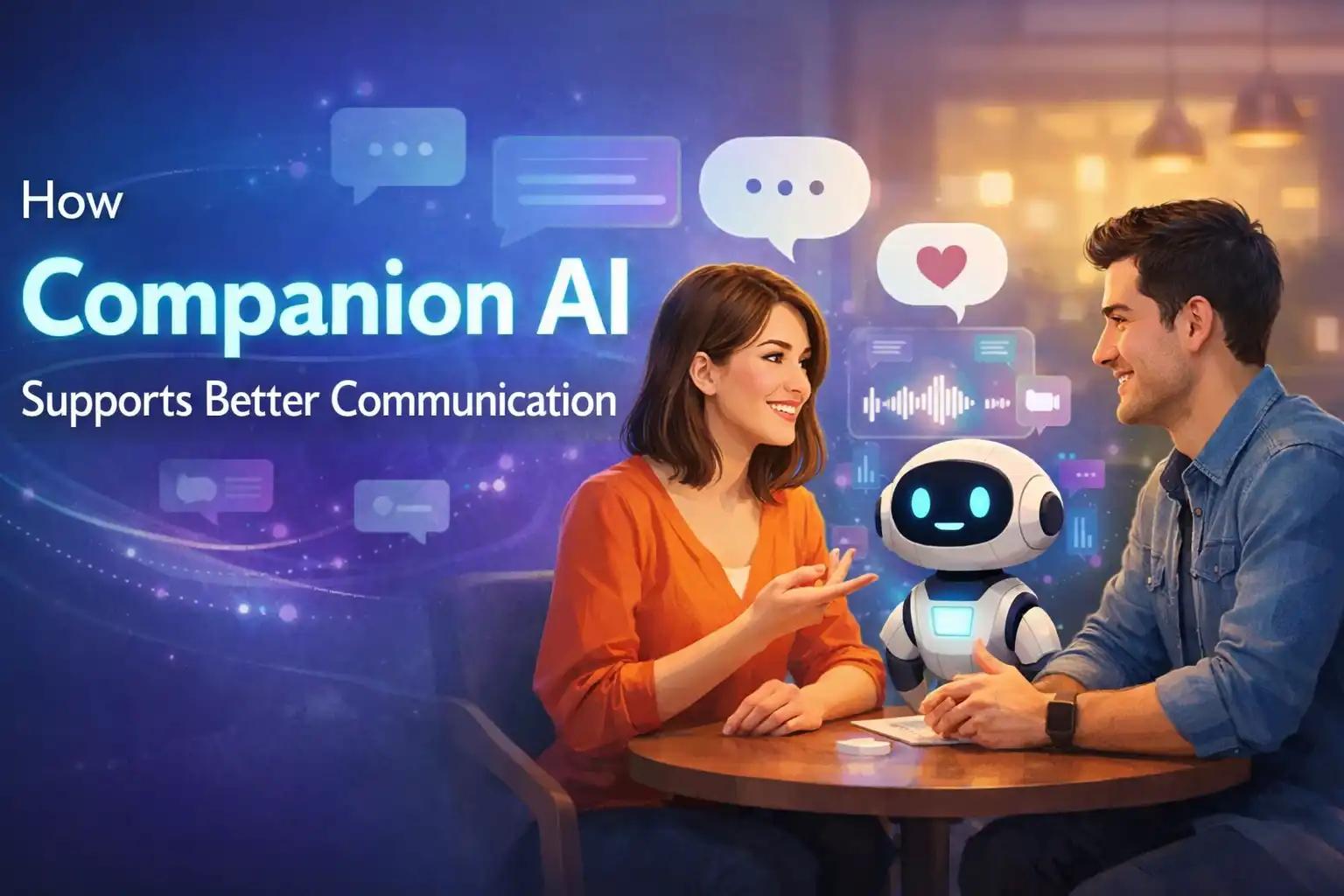
One of the most difficult aspects of communication is the inability of many individuals to express their emotions in a way that can be understood. As a result, misunderstandings are common in the relationship; therefore, there are couples instead of turning to each other often choose to use a companion AI. An AI companion serves as a source of support for individuals in expressing anything related to their relationship with their partner. For example, some people will discuss:
- Their feelings of frustration towards the relationship
- Things they wish they could express to their partner
- What has made them feel uncomfortable
- Concerns about upcoming relationship decisions
Written in a manner that does not contain any forms of judgement or criticism and who provides a non-judgemental safe haven for individuals to discuss their feelings openly; individuals usually feel completely free to express their true emotions.
Over time, Companion AI can help users:
- Clarify their thoughts before difficult conversations
- Practice expressing emotions calmly
- Understand different perspectives
- Reflect on relationship patterns
As an example, let's say that you're angry about something your partner did. Rather than reacting to this anger right away, first, you might talk about it with your AI partner. This break may give you a clearer and more compassionate way to approach the conversation with them.
Companion AI as an Emotional Support Tool
Relationships require emotional awareness. Sometimes people carry stress from work, family, or personal struggles that affect how they interact with their partner.
A Companion AI can provide a supportive space to process these emotions.
Think of it like journaling—but interactive.
Users can share thoughts such as:
- Feeling overwhelmed
- Relationship doubts
- Personal insecurities
- Communication struggles
The AI companion can respond with reflective prompts like:
- “What part of that situation bothered you most?”
- “Have you talked about this with your partner?”
- “What outcome would feel fair to you?”
These small prompts encourage deeper reflection.
Instead of bottling emotions or reacting impulsively, people gain time to process their feelings. This often leads to healthier interactions with their partner later.
Practicing Difficult Conversations with Companion AI
Some conversations in relationships are simply hard.
Topics like finances, boundaries, intimacy, or future plans can feel uncomfortable to bring up. Many people avoid these discussions until frustration builds up.
Using Companion AI, users can rehearse these conversations in advance.
For example, you might ask the AI companion:
- “How can I tell my partner I need more personal space?”
- “What’s a respectful way to talk about shared expenses?”
- “How do I express my feelings without sounding accusatory?”
The AI can suggest wording that sounds calm and constructive.
Here’s a simple example.
Instead of saying:
“ You never listen to me.”
The AI might suggest:
“ I sometimes feel unheard when we talk about this. Can we try to understand each other better?”
This small change can completely transform how a conversation unfolds.
When Companion AI Helps Individuals Grow
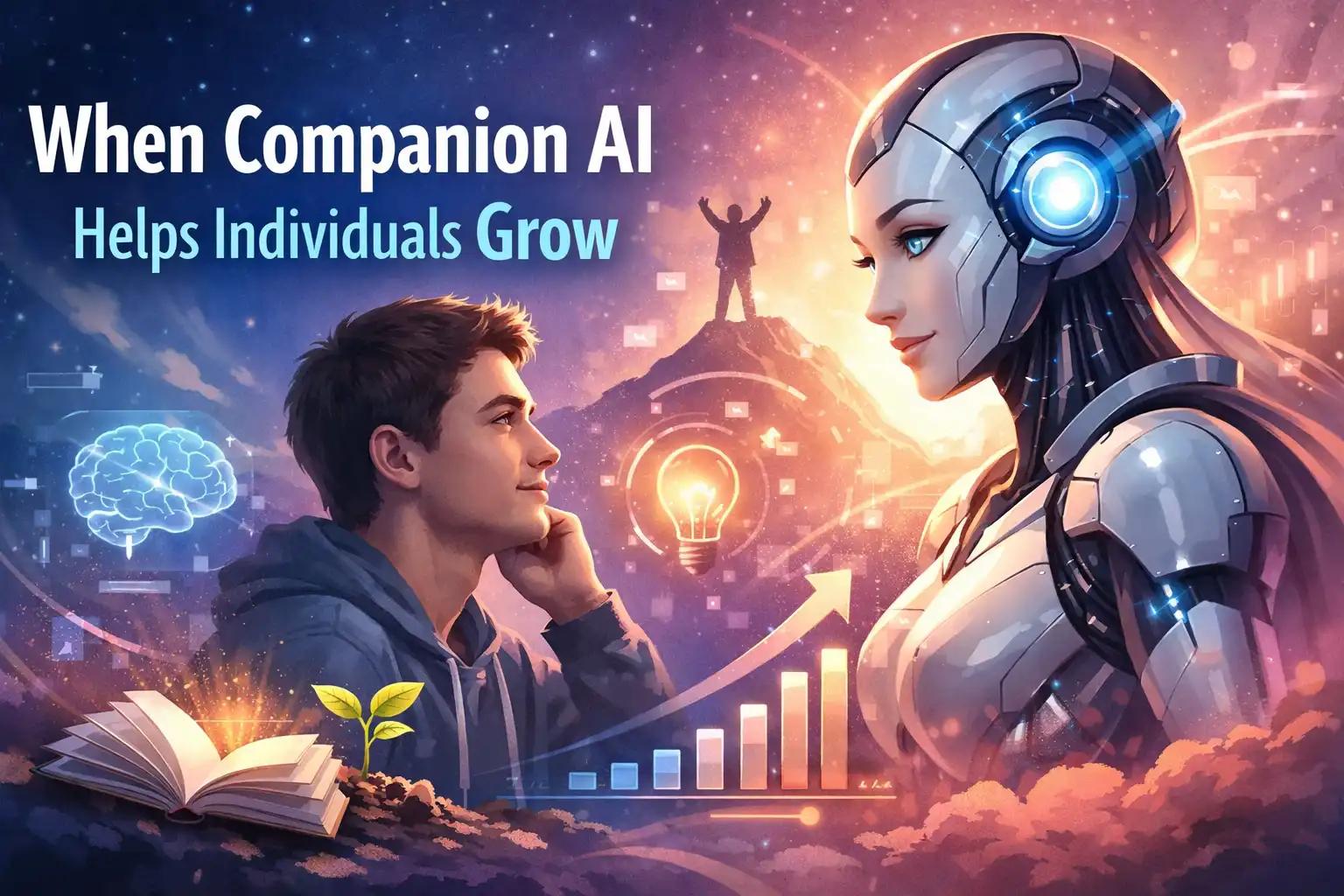
Healthy relationships start with self-awareness.
Many people enter relationships without fully understanding their own communication habits, emotional triggers, or expectations.
Regular interaction with Companion AI can help individuals develop better self-reflection.
Some benefits include:
- Identifying emotional triggers
- Recognizing recurring relationship patterns
- Understanding personal needs
- Improving emotional intelligence
For example, someone might realize that they tend to shut down during arguments. After discussing this with their AI companion, they may become more mindful about staying engaged during difficult conversations.
Personal growth like this often leads to stronger, healthier relationships.
Common Misconceptions About Companion AI
Despite its growing popularity, there are still misunderstandings about Companion AI.
Let’s clear up a few common myths.
Myth 1: Companion AI Replaces Real Relationships
In reality, most people use Companion AI as a support tool, not a replacement. It’s more like a digital assistant for emotional reflection.
Myth 2: Only Lonely People Use AI Companions
Many users are actually in relationships. They use Companion AI to think through challenges, improve communication, or explore personal growth.
Myth 3: AI Companions Give Perfect Advice
AI is still a tool. While Companion AI can offer helpful perspectives, it shouldn’t replace real conversations, therapy, or professional advice when needed.
Understanding these boundaries ensures that AI companions are used in a healthy and balanced way.
Tips for Using Companion AI in a Healthy Way
If you’re curious about trying Companion AI, the key is to treat it as a supportive tool rather than a substitute for real connections.
Here are some practical tips.
1. Use It for Reflection
Think of Companion AI as a place to organize your thoughts before speaking with your partner.
2. Avoid Replacing Real Conversations
The goal is to improve communication, not avoid it.
3. Be Honest in Your Conversations
The more honest you are with your AI companion, the more helpful the insights will be.
4. Focus on Personal Growth
Use Companion AI to understand your emotions, reactions, and expectations.
5. Keep Balance
Technology should support your relationship—not become the center of it.
When used responsibly, Companion AI can become a surprisingly helpful tool for emotional clarity.
The Future of Companion AI in Relationships
The technology behind Companion AI continues to evolve quickly. Modern AI companions are becoming more advanced in understanding tone, context, and emotional cues.
In the future, AI companions may include:
- More personalized relationship insights
- Voice-based conversations
- Emotional tone detection
- Interactive coaching for communication skills
Companion AI could potentially become a more useful tool for people who want to improve their relationships with other people due to these advancements. It is important to note, however, that in all cases, the human element remains very important. The assistance, guidance, and support provided by AI can help facilitate an emotional connection between two individuals but will never replace that genuine emotional connection between people.
Conclusion
Ultimately, the answer is based on the context in which it is being utilized; that is, if you treat it more as a “mirror” than as a replacement for human social interaction, then Companion AI may be able to enhance your self-awareness, help you communicate much better, and give you the tools needed to find greater emotional intelligence when approaching your relationship problems. Additionally, by using Companion AI as an objective listener, users will be able to process their feelings; practice difficult conversations; and gain insight into their relationship behaviours.
Communicating, feeling for someone else, and working to grow oneself creates relationships. One interesting aspect is that Companion AI is able to enhance all three of those aspects as well. Have you had a chance to talk to a Companion AI about your relationship problems? Please leave your comments below, or check out more content about digital relationships and AI companions if you're interested in how this tech is going to affect the way we relate with others.

Alex Morgan is an AI-focused blog writer passionate about artificial intelligence, machine learning, and emerging technologies. With a goal to make complex AI concepts simple and accessible, Alex writes practical, easy-to-understand content for beginners and tech enthusiasts alike.