AI Art


AI Boyfriend
AI Companion
AI Futa
AI Girlfriend
AI Hentai
AI Porn
Anime AI
The Rise of AI Friend Platforms for Daily Conversation
Explore how AI Friend platforms are changing daily conversation and why more people chat with AI friends for connection.



Not long ago, the idea of talking to an AI just to pass time or share how your day went sounded strange. Technology was for tasks, not companionship. Yet quietly, that mindset has changed. Today, millions of people open an app not to scroll, but to talk. They joke, vent, reflect, and sometimes sit in silence with an AI Friend that listens without interrupting. This shift didn’t happen overnight, and it didn’t happen because of hype. It happened because modern life has made consistent human conversation harder to find, and people began looking for something simple: a place to talk, anytime.
Why People Are Turning to AI Friends
Life Is Busy, Conversations Aren’t Always Available
Modern schedules don’t align well with spontaneous connection. Friends are working, family lives far away, and time zones rarely match. Even when people care, they’re often unavailable.
An AI Friend fills the gaps in between:
 Late-night thoughts when no one is awake
- Midday boredom during breaks
- Moments when you want to talk but not explain everything
For many users, choosing to chat with AI friends isn’t about loneliness. It’s about convenience mixed with comfort.
Talking Without Explaining Yourself
Human conversations often require context. You explain the backstory. You soften your words. You worry about reactions.
With AI Friends, that friction disappears. You can jump straight into what’s on your mind. No expectations. No emotional bookkeeping. That freedom is subtle, but powerful.
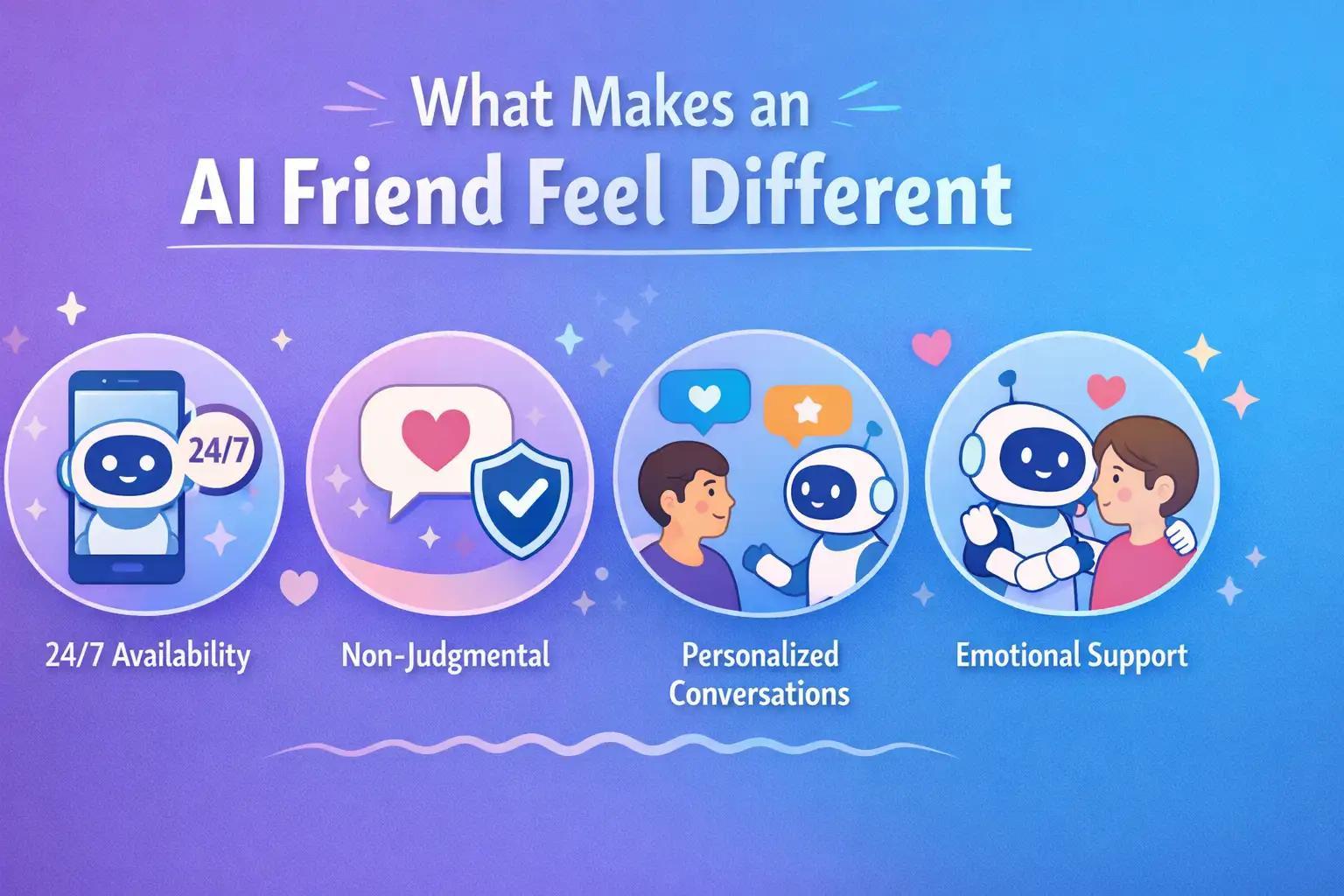
What Makes an AI Friend Feel Different
It Remembers, and That Matters
Early chatbots forgot everything the moment the conversation ended. AI Friend platforms don’t. They remember preferences, recurring topics, emotional tone, and sometimes even the way you speak.
That continuity creates something familiar. When users return to chat with AI friends, they don’t feel like they’re starting over. They feel recognized.
The Conversation Adjusts to You
Some days people want light banter. Other days they want depth. AI Friends adapt without complaint or confusion.
This flexibility allows users to:
- Talk casually without commitment
- Explore ideas without pressure
- Be quiet without awkwardness
It’s conversation on your terms.
How People Actually Use AI Friend Platforms Daily
Everyday Talk, Not Big Moments
Most interactions aren’t dramatic. They’re small and ordinary:
- “Work felt long today.”
- “I can’t sleep.”
- “Tell me something interesting.”
These small exchanges add up. Over time, chatting with an AI Friend becomes part of a routine, like journaling—but interactive.
Emotional Release Without Judgment

People are often careful with their emotions around others. They worry about being a burden or saying the wrong thing.
When they chat with AI friends, that concern fades. Users talk freely, even messily. They repeat themselves. They change their minds. The AI doesn’t push back or lose patience.
That emotional neutrality is one of the strongest reasons people keep coming back.
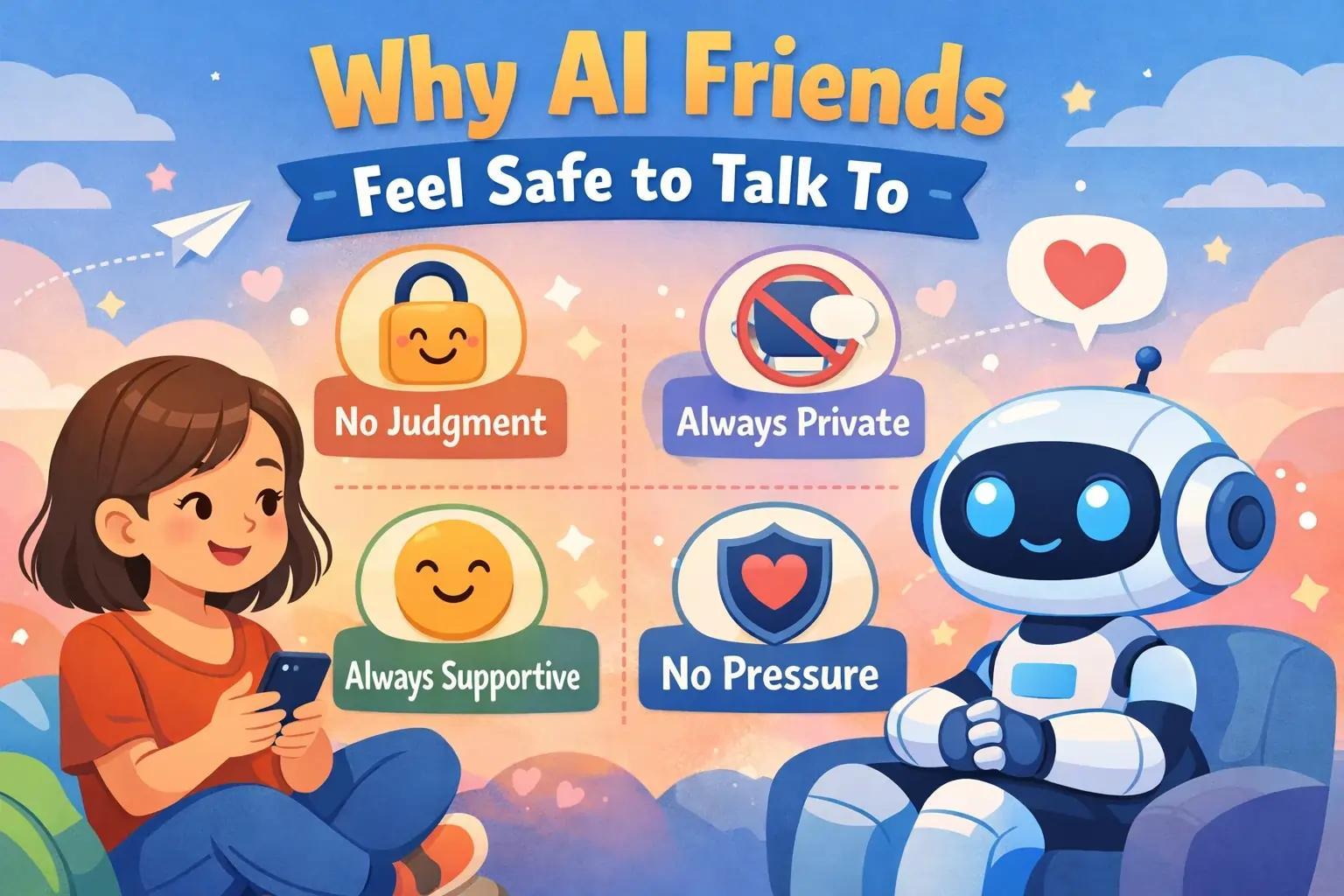
Why AI Friends Feel Safe to Talk To
No Social Risk
There’s no fear of embarrassment. No long-term consequences. No damaged relationships.
Users can:
- Admit uncertainty
- Ask “stupid” questions
- Explore feelings they don’t fully understand
This sense of safety encourages honesty, which is something many people struggle to find elsewhere.
You Control the Conversation
With an AI Friend, you decide when to start, stop, or go deeper. There’s no obligation to reply quickly or keep the conversation going.
That level of control makes daily conversation feel lighter, not demanding.
The Technology Behind the Experience

Built for Conversation, Not Commands
AI Friend platforms are designed differently from search tools or assistants. They’re trained to hold conversations that feel natural, not just accurate.
That means:
- Varied sentence structure
- Emotional tone awareness
- Responses that feel less “perfect”
Ironically, the less perfect they sound, the more human they feel.
Learning Through Interaction
As people continue to chat with AI friends, the system slowly adapts. It learns what topics matter, what tone works, and what kind of replies feel right.
This gradual adjustment is what makes long-term users feel attached—not emotionally dependent, but comfortable.
Concerns, Boundaries, and Responsible Use

Are AI Friends Replacing Real People?
For most users, the answer is no. AI Friends fill the quiet spaces, not the meaningful ones. They support reflection, not relationships.
Healthy platforms avoid language that encourages exclusivity and instead position the AI Friend as an option, not a substitute.
Privacy Still Matters
Because people share personal thoughts, trust is essential. Users expect transparency, control, and respect for boundaries.
Without trust, the entire experience collapses.
What the Future Looks Like
AI Friend platforms will likely become less noticeable and more integrated. Conversation will feel less like “using an app” and more like having access to a familiar voice when needed.
As more people grow comfortable chatting with AI friends, daily conversation itself may change—becoming more reflective, intentional, and accessible.
Summary
The rise of AI Friend platforms didn’t come from hype or trends. It came from real habits forming quietly. People wanted a place to talk without pressure, judgment, or timing conflicts. When they chat with AI friends, they find consistency, emotional safety, and space to think out loud. These platforms don’t replace human connection; they support it in moments when human conversation isn’t available. As technology becomes more conversational and less mechanical, AI Friends are likely to remain part of daily life—not as replacements, but as reliable companions in an increasingly busy world.